
Markets have always had a reason to panic. The investors who ignored that reason are the ones who won.
Turn on the news right now and it is a lot.
Tariffs flying between the US and pretty much everyone. Tensions escalating in the Middle East. Markets swinging hundreds of points in a single session. Your portfolio looking like a rollercoaster you definitely did not sign up for.

And somewhere in the back of your mind, a little voice is whispering: should I just move everything to cash until this blows over?
Here is the honest answer: probably not. Actually, almost definitely not.
We live in uncertain times, and no matter when you are reading this, chances are you can look around and find something in the world that feels like a good enough reason to pull back. That feeling is normal. Acting on it is where things tend to go wrong.
We Have Seen This Before
Remember that scene in The Big Short where everyone finally realizes the housing market is collapsing and panic sets in? That urge to bail before it gets worse is one of the most human responses to financial stress. It is also one of the most expensive ones.
Markets have always had a reason to be scary. Here is what investors thought they should sell through, and what actually happened after:
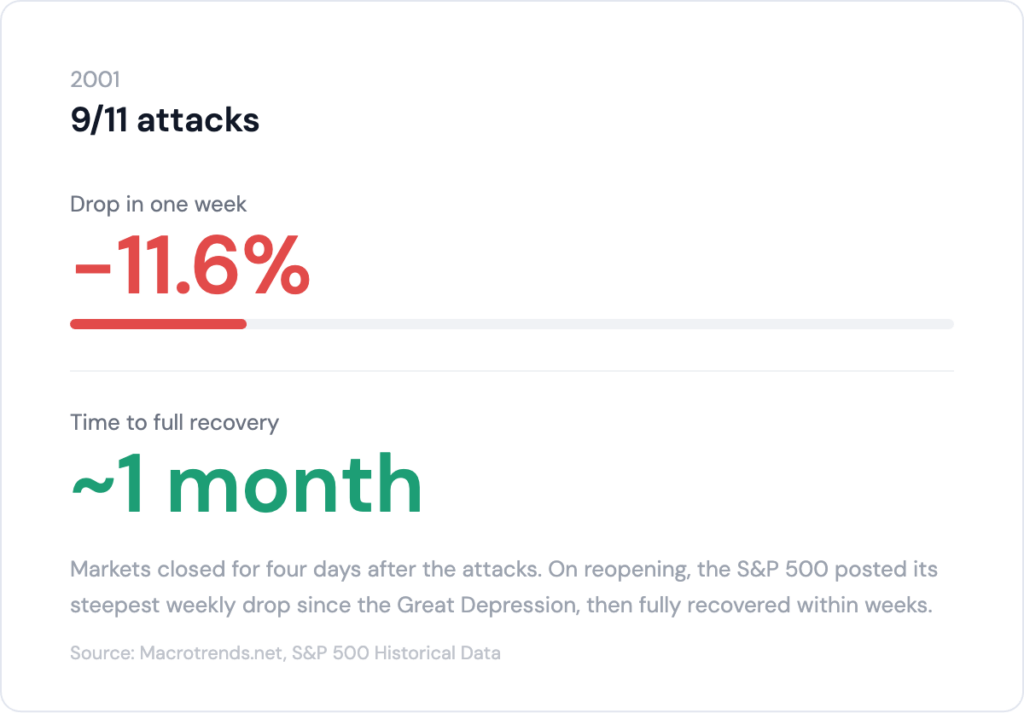
9/11, 2001
The S&P 500 dropped over 11% in a single week. Within a month, it had recovered.
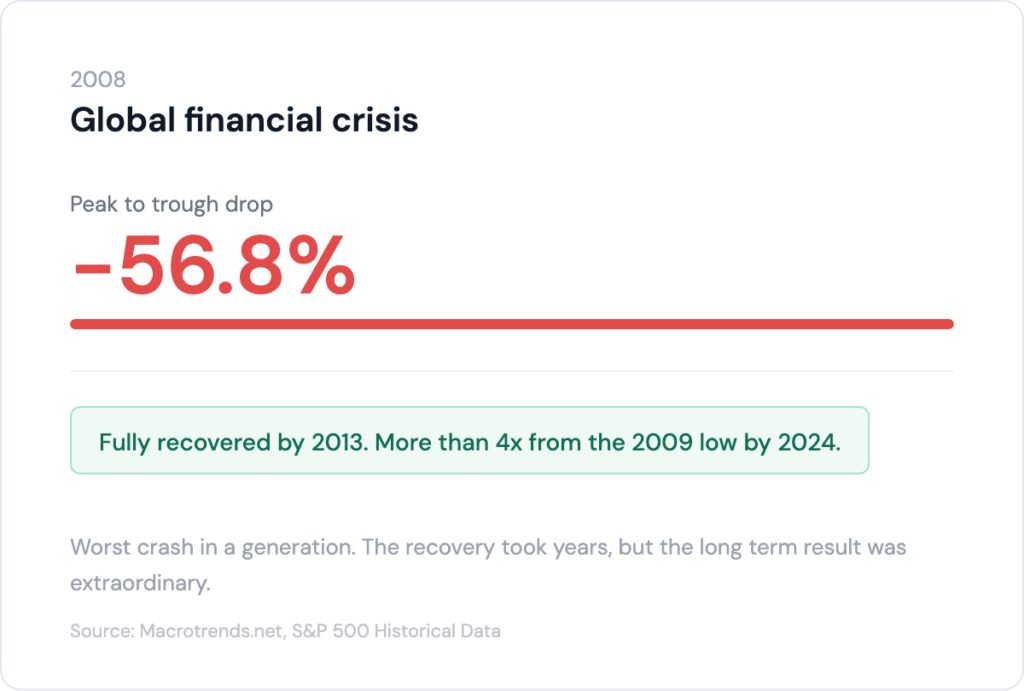
The 2008 Financial Crisis
The worst crash in a generation. Markets fell nearly 57% from peak to trough. By 2013 they had fully recovered. By 2024, they had more than quadrupled from the 2009 low.
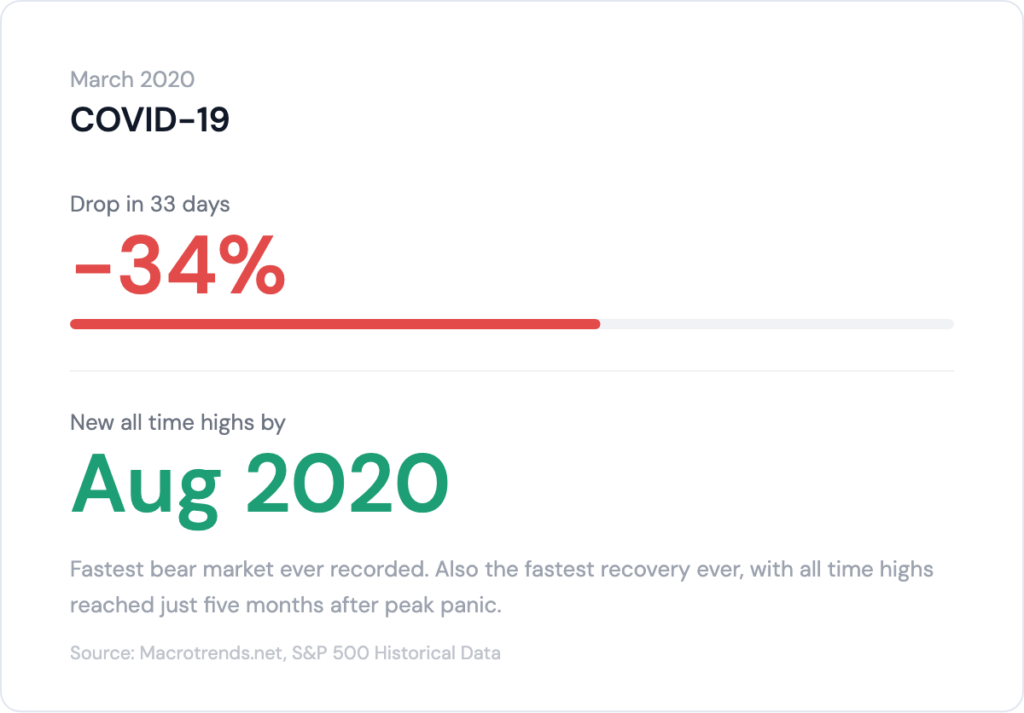
COVID-19, March 2020
A 34% drop in 33 days. The fastest bear market ever recorded. Also the fastest recovery ever. New all-time highs by August of the same year.
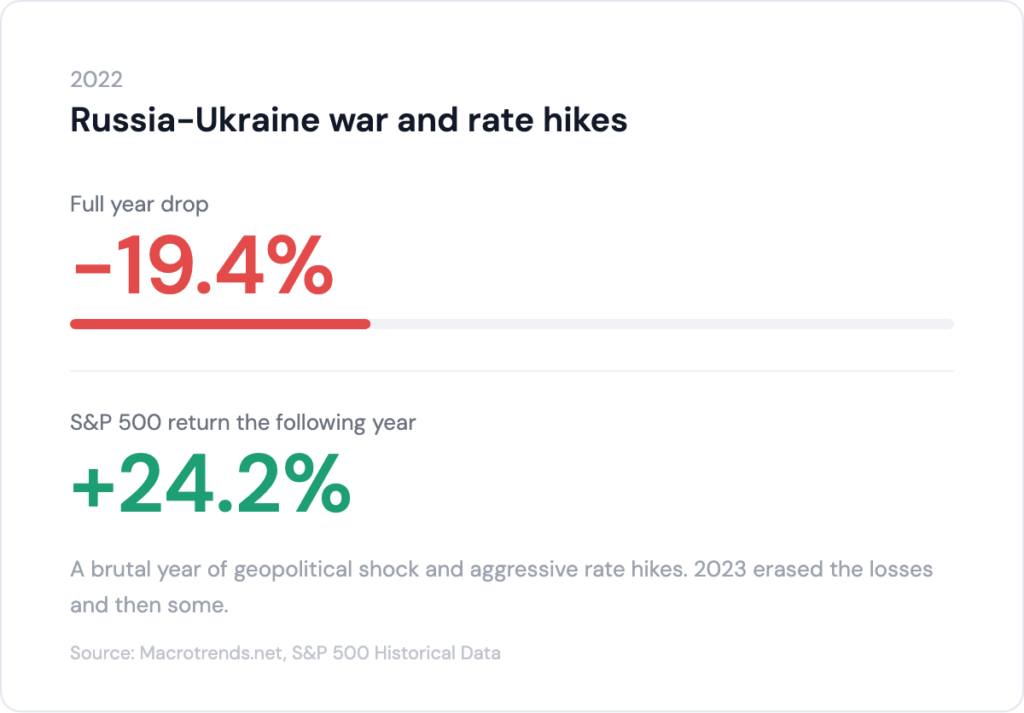
Russia-Ukraine War, 2022
Combined with aggressive rate hikes, the S&P 500 fell about 19% that year. The following year it was up over 24%.
The Most Expensive Days to Miss
Here is the stat that should give any investor pause before moving to the sidelines.
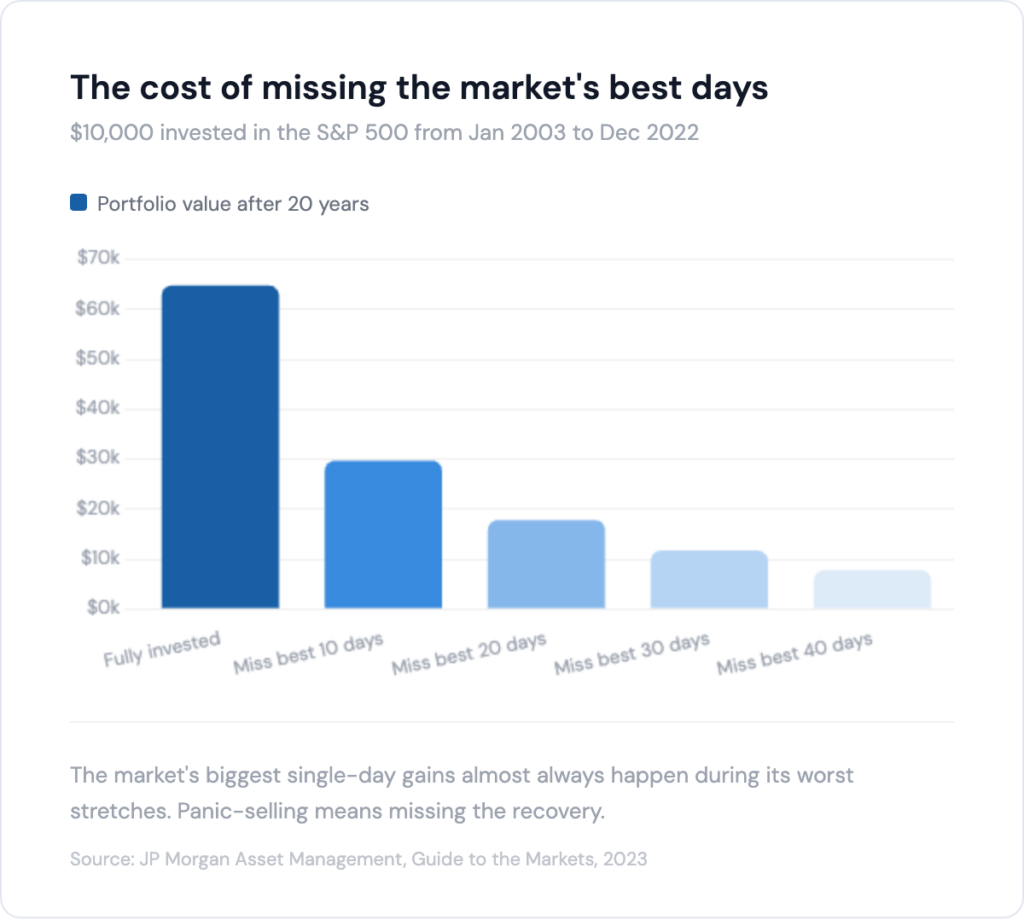
According to JP Morgan’s Guide to the Markets, if you missed just the 10 best trading days in the market over a 20-year period, your returns were cut nearly in half. Miss the 20 best days? You ended up with less than you started with.
The part that stings: those best days almost always happen in the middle of the worst stretches. The market’s biggest single-day gains have historically occurred during bear markets and periods of peak uncertainty, exactly when most people have already panic-sold.
Timing the market sounds smart. In practice, it mostly just means missing the recovery.
What Is Actually Going On Right Now
The concerns are real. Tariff escalation is creating genuine uncertainty for businesses. Conflict in the Middle East has energy markets on edge. Nobody knows exactly how this plays out.
But here is the thing about markets. They are forward looking. By the time something is scary enough to make you want to sell, that fear is already priced in. Markets do not wait for the news to settle. They move on expectations, and right now those expectations are already reflecting a lot of the bad news you are seeing on your screen.
The average intra-year market drop is about 14%. But in roughly 75% of those years, markets still finished the year positive. Volatility is not a sign that something is broken. It is just the market doing what it does.
What You Should Actually Do
Not a lot. But a few things matter.
Do not check your portfolio every day. It genuinely does not help. The number on the screen today is not your retirement balance. It is a moment in time.
Review your risk tolerance, not your holdings. If this market is making you lose sleep, that is useful information. But it is a signal about how your portfolio is structured, not a signal to sell everything today.
Think about the full picture. Market returns are one piece of your financial plan. Insurance, estate planning, disability coverage, these are the things that protect your financial foundation regardless of what the market does on any given Tuesday. The best time to shore up those pieces is when volatility reminds you that uncertainty is real.
Talk to your advisor. Not to make changes out of fear. To get grounded, review your plan, and remember why it was built the way it was.
The Bottom Line
There will always be a new reason to be afraid. A war. A rate hike. A pandemic. A trade dispute. That is not pessimism, that is just the last 100 years of market history.
What that same history also shows is that the long-term direction of the market has never permanently broken. Crashes end. Recoveries happen. And the investors who stayed in through all of it, through every scary headline and every brutal week, are the ones who actually built wealth.
Your plan was built for weeks like this one. Trust it.
Want to review how your financial plan is positioned right now? Book a book an online consultation or reach out to our team. We will walk through how your financial plan is positioned, review your coverage, and make sure that no matter what the market or the world throws your way, your family and your finances are protected.